
Solutions
Biochar & MRV
From biomass to biochar, and from biochar to verified carbon removal.
What we hear from clients
“We have agricultural and forestry residues available, but much of this biomass has limited value or is difficult to manage. We want to know whether we can convert it into useful biochar.”
“We are interested in carbon removal, but we need to know how much carbon is actually stored in our biochar and how to document it credibly for carbon certification.”
What we do
BeyondSus provides technical support across the biochar project cycle, from feedstock assessment and production-system design to carbon calculations, MRV and certification support.
Our services include
- Biochar production system design
- Develop practical production approaches suited to available feedstocks, farm conditions and required production volumes.
- Feedstock evaluation
- Assess available biomass such as agricultural residues, pruning materials, bamboo and other suitable organic materials.
- Biochar quality assessment
- Support analysis of key properties relevant to biochar quality and carbon-removal calculations.
- Production optimization
- Review production processes and help improve consistency, efficiency and product quality.
- Carbon removal calculations
- Estimate carbon stored in biochar and account for relevant emissions associated with production, transport and application.
- MRV implementation
- Develop practical systems for tracking feedstock, production, quality, application and other data required for carbon accounting.
- Carbon certification support
- Support preparation of technical documentation and evidence required for applicable carbon-credit programs and verification.
We don't treat biochar simply as a soil amendment. We help establish the evidence needed to demonstrate its carbon-removal value.
How an engagement runs
- 01 · Assess
Understand your biomass
We assess available feedstocks, quantities, seasonality, location, existing waste-management practices and potential applications.
Typical timing 1–3 weeks*
- 02 · Design
Design the biochar system
We evaluate suitable production approaches and develop a practical system based on feedstock characteristics, required production volume and project objectives.
Typical timing 2–6 weeks*
- 03 · Produce & test
Make and characterize the biochar
We support production trials and quality assessment, including relevant parameters such as fixed carbon, H/C ratio, moisture content and production efficiency.
Typical timing Project-dependent
- 04 · Measure & document
Build the MRV system
We establish procedures for recording feedstock, production, transport, application and other information needed to calculate carbon removal.
Typical timing Throughout the project
- 05 · Certify
Prepare for carbon crediting
We support project documentation and preparation for applicable carbon-credit programs and independent verification.
Typical timing Methodology/program-dependent
* Timings are indicative and project-dependent.
Who it's for in Sri Lanka
We support farmers, agribusinesses, biochar producers, plantations, livestock operations and businesses with agricultural or biomass residues that are interested in biochar production, soil applications or carbon-removal opportunities.
Potential feedstocks
- Rice husk
- Forestry residues
- Fruit-tree and tea prunings
- Vegetable crop residues
- Wood and agricultural processing residues
- Feedstock suitability
- The actual suitability of a feedstock should be assessed before production, particularly in relation to availability, contamination, moisture, transport and applicable carbon methodology requirements.
- Potential applications
- Agricultural soil improvement, biomass waste management, farm-based biochar production, carbon-removal projects, circular agricultural systems and carbon-credit development.
- Farm/project size
- Projects can be assessed based on available biomass, production volume, application area and carbon-crediting potential.
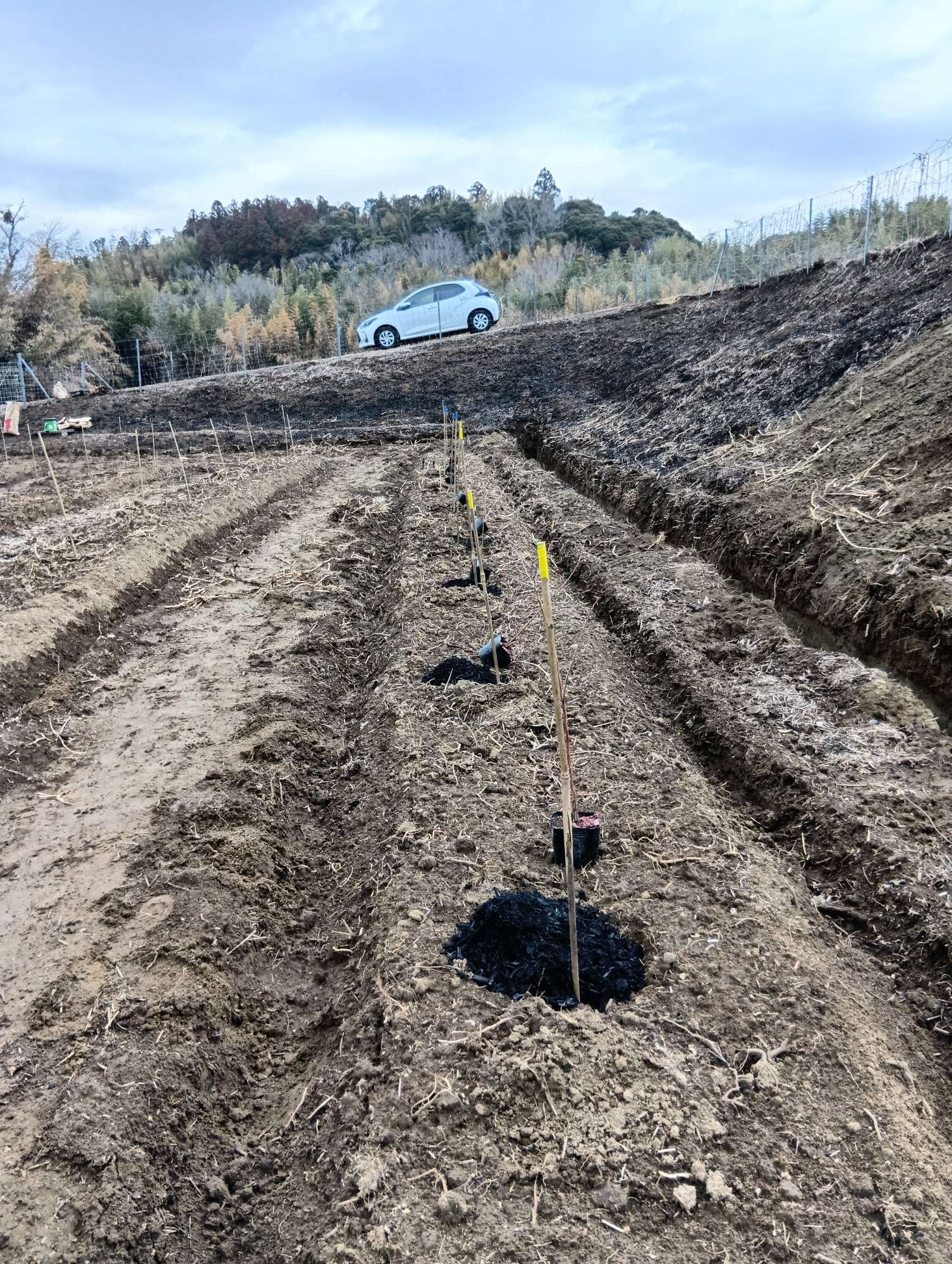
Japan proof point
Biochar Application in Blueberry Cultivation, Chiba, Japan
20 ha blueberry farm · Bamboo + blueberry pruning residues
The project is developing a farm-based biochar system using bamboo waste and blueberry pruning branches. The first-year production target is 2.5 tonnes, with a planned application rate of 5 t/ha, so application across the farm is phased. Biochar quality assessment includes fixed carbon, H/C ratio, moisture content and production efficiency. The case study reports an indicative 79% fixed-carbon content and identifies carbon-removal and carbon-credit potential as part of the project.
- About 79% fixed carbon (indicative)
- H/C ratio 0.7
- No credits issued yet
Reported results from a project in Japan. Sri Lankan outcomes are subject to baseline assessment.
Biochar in Sri Lanka: common questions
Agricultural residue → Biochar → Soil → Carbon removal
What feedstocks can be used in Sri Lanka?
We assess locally available agricultural and forestry residues to identify suitable feedstocks for biochar production, considering availability, moisture, contamination, transport, production characteristics and carbon-credit requirements.
Which production system is suitable?
The appropriate production system depends on feedstock, production volume, location, investment level, energy requirements and the intended application.
How do you determine whether biochar is good quality?
Biochar quality needs to be assessed before its carbon-removal potential can be reliably calculated.
How is carbon removal calculated?
Carbon removal is estimated from the stable carbon retained in the biochar, while accounting for relevant emissions associated with the biochar system.
What does MRV involve for biochar?
Our MRV approach creates a traceable chain from biomass feedstock to biochar production, soil application and quantified carbon removal.
What certification pathway can be used?
The certification pathway depends on the project location, feedstock, production process, biochar application and applicable carbon-credit program or methodology. BeyondSus assesses the project and identifies an appropriate certification pathway before project development.
Can biochar improve soil as well as remove carbon?
Biochar can potentially provide soil-management benefits in addition to carbon removal, depending on its properties, application rate, soil conditions and crop system. Potential areas to assess include soil structure, water retention, nutrient retention, soil organic matter and agricultural residue utilization.
How much biochar should be applied?
Application rates should be determined based on biochar characteristics, soil conditions, crop requirements and the objectives of the project.
What determines the economics?
Biomass availability, transport distance, production cost, biochar yield and quality, application cost, carbon-removal potential and carbon-credit value.
Questions clients ask
What agricultural residues can be used to produce biochar?
Potential feedstocks include rice husk, pruning residues, forestry materials and other suitable agricultural biomass. Feedstock suitability depends on its characteristics, availability, contamination risk and the requirements of the selected production and carbon methodology.
Can all biochar generate carbon credits?
No. Producing biochar does not automatically mean that carbon credits can be generated. The project must satisfy the requirements of the relevant carbon-credit methodology, including appropriate feedstock, production, carbon-content and MRV requirements.
How much carbon can my biochar store?
It depends on the feedstock, production process, biochar properties, application quantity and applicable methodology. We assess biochar quality and project data to calculate the potential carbon-removal quantity.
Do I need to build a large biochar facility?
Not necessarily. The appropriate production system depends on the available biomass, required production volume, location, investment level and project objectives. We can assess the appropriate technical approach before investment.
Pricing
Project-based pricing
Biochar projects vary according to feedstock availability, production volume, application area, technical requirements and MRV scope.
Book a consultation to discuss your biomass and project goals.
Book a consultationTell us about your land.
A short call is usually enough to tell whether an assessment makes sense. We reply within two business days.
Prefer to message? Book on WhatsApp